
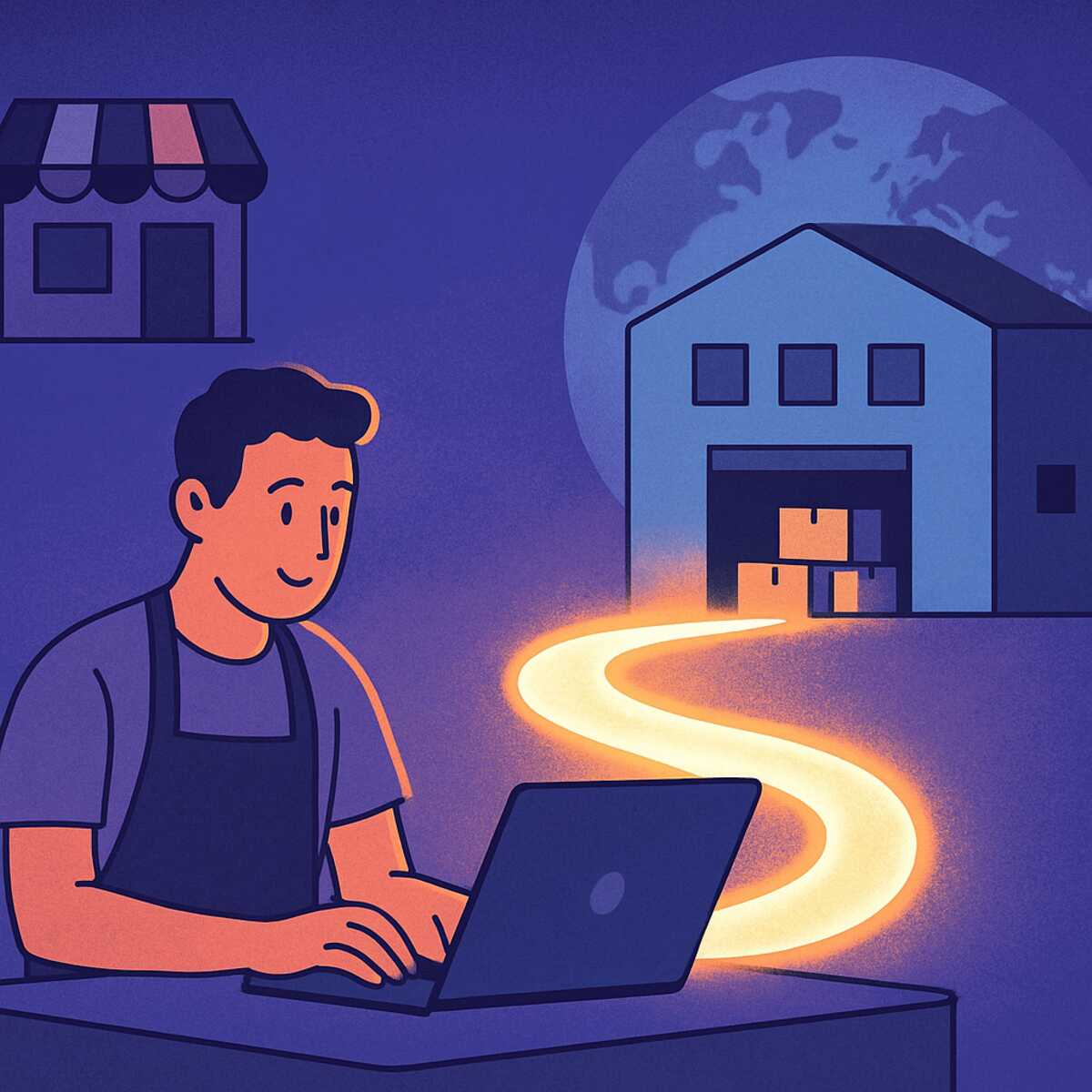

Imagine you have just sold your very first custom yoga mat online. Instead of rushing to the local post office with a cardboard box, a hidden piece of software automatically tells a factory across the country to pack and ship the item for you. This is the magic of dropshipping (a business model where you sell products without ever holding the physical inventory yourself). While most people understand that Shopify provides the tools to build a beautiful website, fewer realize exactly how those products travel from a manufacturer to a customer’s front door. Choose the best dropship app for shopify.
Manually typing out customer addresses and sending emails to suppliers for one or two orders is easy enough. Trying to manage fifty daily orders by hand, however, quickly becomes an impossible nightmare. Managing your catalog without software is the exact equivalent of trying to build a car by hand instead of using a modern assembly line. Scaling your online storefront requires you to completely eliminate tedious manual data entry before it overwhelms your schedule.
To solve this early bottleneck, you need a digital stockroom manager. Think of Shopify apps as a glowing digital bridge that connects your empty virtual shelves directly to massive global warehouses. These software plugins attach to your storefront to help you easily browse supplier catalogs. Rather than calling factories yourself to request inventory, you simply click a button to copy their product photos and descriptions straight into your own store.
Does this mean you never have to actually touch the physical product? Yes, exactly. This process relies entirely on fulfillment automation (where software automatically handles the entire ordering and shipping sequence behind the scenes). According to widespread e-commerce industry data, stores that utilize automated e-commerce solutions experience significantly fewer shipping delays and data entry errors. The software acts as an invisible messenger, securely passing the buyer’s shipping address directly to the supplier the second a purchase is made.
In practice, this technology saves you hours of exhausting work in three highly specific ways every single day. First, it instantly imports new product images and details to your store with a single click. Second, it keeps a live eye on the supplier’s warehouse to update your prices and automatically mark items “out of stock” if they run out. Finally, it routes every customer order directly to the right shipping facility without you needing to copy and paste a single tracking number.
Launching a profitable storefront no longer requires a massive upfront investment in boxes, tape, or warehouse space. Finding the right Shopify dropshipping apps provides a remarkably low-friction path to starting a sustainable business. By letting the technology serve as your dedicated bridge to reliable suppliers, you can focus your daily energy on marketing your brand and finding new customers. The heavy lifting is already handled for you.
Why You Can’t Run a Modern Store Without Automated Order Fulfillment Software
Imagine getting your first ten orders for phone cases in a single afternoon. If you are handling things manually, you must individually copy every customer’s name, street address, and product choice into an email to your supplier. Taking just five minutes per order means you lose nearly an hour doing basic administrative chores instead of growing your business.
This manual copying also creates a massive risk for costly human errors. Typing “Main Street” instead of “Maine Street” means a buyer never gets their package, which ruins their experience and hurts your wallet. To fix this, modern apps use a process called data mapping—a digital translator that perfectly matches the checkout fields on your Shopify store directly to the exact labels your supplier’s computer needs.
Because of this seamless connection, you need automated order fulfillment software to survive as your store grows. When a customer buys that phone case, the software acts as an invisible manager that instantly alerts the warehouse to pack the box and print the shipping label. You never have to touch a spreadsheet or send a frantic email to fix a spelling mistake again.
Relying on these e-commerce solutions turns a chaotic daily grind into a smooth, hands-off process. Once your orders flow straight to the factory without manual intervention, you can focus on expanding your digital shelves by automating product imports.
How to Automate Shopify Product Importing to Save 10+ Hours Weekly
Manually downloading hundreds of product photos and typing out prices will quickly drain your energy. Learning exactly how to automate shopify product importing changes the game entirely. Instead of saving images to your desktop and uploading them individually, a dropshipping app acts like a digital vacuum. It safely pulls the pictures, prices, and details from your supplier’s website and drops them directly into your Shopify dashboard.
Setting up your first product gallery takes under three minutes when you follow a simple four-step process inside most shopify apps. First, find a trending item like a silicone phone case in the app’s catalog. Second, edit the title to make it catchy. Third, click the import button to send the data to your store. Finally, publish the item so customers can start buying immediately.
While this fast transfer is amazing, you must avoid a common beginner trap: leaving the “factory descriptions” untouched. Suppliers often write boring, robotic details like “Item #402, Blue, Plastic” instead of explaining why a customer needs the product. Before publishing, always rewrite the text to sound appealing and double-check your product variants—which are simply the different choices buyers select, like small, medium, red, or black.
Polishing those imported details takes seconds, but skipping the manual data entry easily saves you 10+ hours a week. Choosing the right tool is essential for pulling inventory onto your digital shelves efficiently.
DSers vs Spocket for Beginners: Which Should You Install First?
Now that you know how to pull products into your store, you face the most critical decision in e-commerce: sourcing. Sourcing simply means finding the right factories to supply your goods, while supplier vetting is the process of making sure those factories are reliable before you sell their items. When looking at DSers vs Spocket for beginners, you are choosing between two entirely different types of digital catalogs. Both tools easily bridge the gap between your Shopify dashboard and a warehouse, but they serve different business strategies.
To make the right choice, you must align the app’s strengths with your overall store goals:
- DSers (Global & Budget-Friendly): This app connects you to millions of low-cost items from China. It is great for testing cheap products and keeping your costs down, but customer shipping often takes several weeks.
- Spocket (US-EU & High-Speed): This platform focuses on pre-vetted suppliers located in the United States and Europe. The items cost a bit more to purchase, but the interface is incredibly beginner-friendly, and customer orders arrive in just a few days.
Choosing the winning app depends entirely on what your buyers expect to experience. If you sell inexpensive novelty items, shoppers might easily tolerate the slower delivery times that come with DSers. However, modern consumers are notoriously impatient when waiting for packages. If you plan to charge higher prices and build a reliable brand that people trust, you must partner with the best suppliers for us based dropshipping. Locating these domestic warehouses is the key to matching premium shipping speeds.
Finding the Best Suppliers for US-Based Dropshipping to Beat Amazon Shipping Speeds
Imagine a customer buying a coffee mug for a friend’s birthday, only to realize it won’t arrive for three weeks. They will probably cancel the order. Since you already know that shipping speed directly controls how many sales you keep, competing with massive retailers means changing where your products come from. This is where domestic sourcing—the practice of using warehouses located in the same country as your buyers—becomes your secret weapon. By partnering with the best suppliers for us based dropshipping, your store transforms from a slow international importer into a fast, local business.
Most modern dropshipping apps make this upgrade incredibly simple with just a few clicks. Inside platforms like Spocket, you simply need to check a filter box labeled “Ships from USA” while searching for your items. Doing this instantly improves your lead time, which is simply the total number of days it takes for a factory to pack and deliver a purchase. Checking that single filter can cut delivery times by 70%, turning a painful twenty-day wait into a pleasant four-day arrival.
Naturally, choosing these local items usually means paying a few dollars more per product than you would for overseas inventory. However, that small extra cost pays for itself when thrilled buyers return to your store again and again. While there are many tactics to explore, finding domestic warehouses is the absolute core of all reducing long shipping times strategies and keeping your customers genuinely happy.
Strategies for Reducing Long Shipping Times and Keeping Customers Happy
Even with local suppliers, some unique items must come from overseas. When this happens, the most effective of all reducing long shipping times strategies is simple honesty. A transparent shipping policy—a dedicated page explaining your delivery rules—prevents angry emails before they happen. You can build instant trust with buyers by including these three clear phrases on your page: 1) “Order processing takes 2-3 business days,” 2) “Expect average delivery times of 10-15 days,” and 3) “You will receive live tracking updates when your item ships.”
Selecting the fastest delivery method inside your software settings is your next defense. When you log in to pay the supplier for an order, most tools offer a dropdown menu of different postal carriers. Always choose upgraded options over “Standard Free Shipping.” Spending just one extra dollar ensures the package gets onto an airplane quickly, rather than sitting on a slow cargo ship for an unpredictable amount of time.
Keeping buyers in the dark while they wait is a quick way to lose future sales. Thankfully, many shopify apps automatically email customers their tracking numbers, which are unique codes that let shoppers follow their package on a map. Instead of sending emails to ask where their order is, customers simply click a link. With your shipping process completely automated, your next priority is protecting your margins from sudden cost changes.
Real-Time Price Monitoring: How to Stop Supplier Price Hikes from Killing Your Profits
Imagine waking up to find you sold 50 coffee mugs overnight, only to realize the factory raised their prices while you slept. When suppliers change their costs without warning, you risk losing money on every single sale. This is why successful store owners rely on real-time price monitoring features built into their software to protect their hard-earned cash.
Rather than checking supplier catalogs manually every day, you can instruct your app to act as a vigilant digital accountant. Inside your dashboard, you can set up simple “Price Rules.” For example, you can tell the system to always price your items high enough to automatically maintain a 30% profit margin, no matter what happens at the factory.
Let’s say you are selling high profit margin dropshipping products, like premium yoga mats. If the manufacturer suddenly increases their cost from $10 to $15 to cover material shortages, the app spots this change instantly. It automatically updates the retail price tag on your Shopify storefront so you never accidentally sell an item at a loss.
Protecting your bank account is just one part of the automation puzzle. Just as prices fluctuate without warning, factories also run out of popular items entirely. To keep your store running smoothly, inventory sync tools prevent the costly mistake of selling out-of-stock items.
Inventory Sync Tools: Never Sell an Out-of-Stock Item to a Frustrated Customer Again
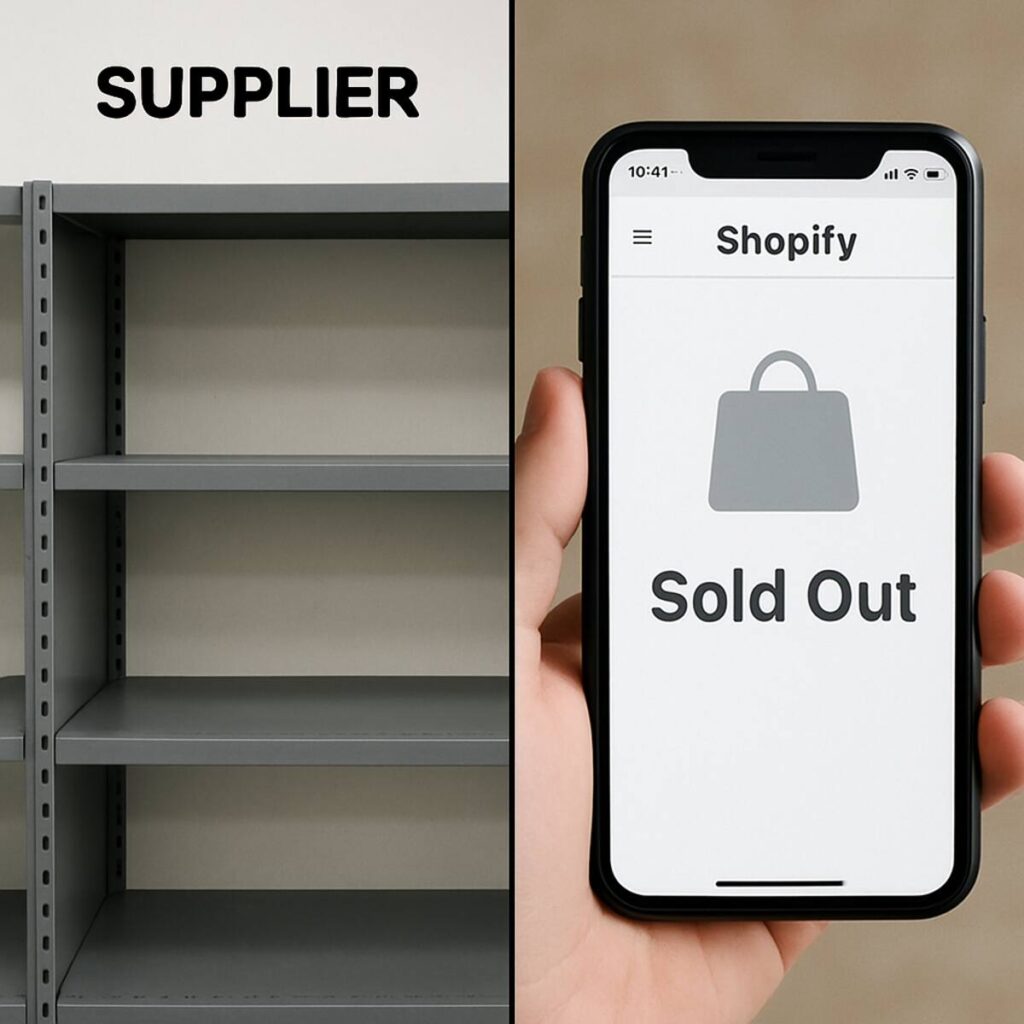
Imagine the excitement of landing a huge sale, only to discover the factory doesn’t actually have the phone cases you just sold. When a customer pays for an item and you are forced to cancel their order days later, you instantly damage your store’s reputation. Nothing frustrates an online shopper more than an unexpected refund for a product they were eager to receive.
This exact nightmare is why successful store owners rely on automated shopify apps to act as a digital stockroom manager. The software keeps a live eye on the factory’s warehouse levels around the clock. If your supplier runs out of a specific item, the app instantly updates your website so the purchase button disappears, keeping your store inventory 100% accurate without manual counting.
Scaling your business often means sourcing items from a dozen different factories, which makes manual tracking impossible. Fortunately, modern inventory sync tools for multiple vendors handle this chaos for you. Whether you are selling phone cases from one supplier and charging cables from another, the system effortlessly manages 10+ different suppliers behind the scenes without getting confused.
Knowing your stock levels are protected allows you to focus on building your brand rather than babysitting warehouse numbers. Choosing the right business model—like Print on Demand versus Traditional Dropshipping—determines exactly how your products are created and fulfilled.
Print on Demand vs Traditional Dropshipping: Choosing Your Business Model
Building a successful store forces you to answer one important question: do you want to be a curator or a creator? Traditional dropshipping relies on finding trending, pre-made items—like yoga mats or charging cables—and marketing them exactly as they are. Conversely, Print on Demand (a model where blank products are printed with your custom designs only after a customer buys them) lets you build an entirely original brand from scratch.
Deciding between print on demand vs traditional dropshipping comes down to how you prefer to spend your time, as each path offers distinct pros and cons:
- Print on Demand (using apps like Printful): You get total creative control to sell unique coffee mugs or apparel, but you must invest upfront time into creating the artwork.
- Traditional (using apps like DSers): You gain access to millions of ready-to-sell items instantly, but you face tougher competition because rival stores can sell those exact same products.
Customization is the secret weapon that often gives the creator model a financial advantage. When you add original artwork to a plain white hoodie, you transform a generic commodity into an exclusive piece. Shoppers will gladly pay a premium for unique items, which creates higher profit margins for your business than relying on standard e-commerce solutions where pricing is a race to the bottom.
Whether you decide to curate pre-made gadgets or launch an exclusive apparel line, your ultimate success depends on selecting the right items to sell. With a fulfillment path chosen, focusing on high profit margin items ensures long-term sustainability.
High Profit Margin Dropshipping Products: What to Look for in a Catalog
Navigating a massive supplier catalog can feel overwhelming, but the secret to finding high profit margin dropshipping products is focusing on the “value-to-weight ratio.” You want items that feel expensive to the customer but are physically light, like a sleek smartwatch band. Because these items cost pennies to mail, the money saved on postage stays right in your pocket. This setup naturally encourages impulse buys from shoppers who see a clever gadget and purchase it without hesitation.
Beginners often make the costly mistake of choosing large, fragile items like glass vases. Heavy and breakable goods quickly drain your bank account through damaged returns and massive shipping fees. You should pivot toward durable, problem-solving products like a posture-correcting back brace instead. These items are virtually indestructible during transit and solve a specific daily frustration, making shoppers eager to open their wallets.
To guarantee your financial success, you must apply the “3x Rule” before importing any item into your shop. This simple pricing formula dictates that if a factory charges you five dollars for a product, you need to confidently sell it for fifteen dollars. The first third covers your base cost, the second pays for advertising, and the final portion becomes your actual profit.
Even with a perfect pricing strategy in place, catching the attention of buyers means discovering these hidden gems early. You must locate winning merchandise before rival stores flood the market. Doing this efficiently requires utilizing niche research tools for ecommerce owners to spot trends before they go viral.
Niche Research Tools for E-commerce Owners to Spot Trends Before They Go Viral
Finding a winning item means diving into a “niche”—a highly focused corner of the market, like selling hiking gear for large dogs rather than generic pet supplies. If you try to sell everything, you end up appealing to nobody. To discover these untouched categories before they become crowded, smart sellers use dedicated niche research tools for ecommerce owners. These platforms act like a radar system, automatically scanning the internet for rising customer interest.
Before importing anything to your store, you must confirm that shoppers actually want to buy it, a crucial step known as product validation. This simple data-check helps you tell the difference between a reliable “trend” (a steady shift in consumer habits, like standing desks) and a fleeting “fad” (a sudden craze that vanishes in weeks, like fidget spinners). By reviewing social media buzz and real sales data, you protect your business from stocking items nobody is searching for.
You do not need a massive budget to start testing your ideas immediately. In fact, three of the most powerful tools for finding hidden gems are entirely free:
- Google Trends: Type in a product name to see if public search interest is growing or shrinking over time.
- TikTok hashtags: Search within your specific category to find product demonstration videos with massive viewer engagement.
- Pinterest: Browse user-created visual boards to spot emerging lifestyle shifts before they hit mainstream catalogs.
While those free sites are excellent starting points, specialized Shopify apps can eventually take over the heavy lifting by constantly monitoring competitor sales data for you. Once your research finally points toward the perfect trending item, your next task is securing a reliable factory, requiring global e-commerce product sourcing platforms to find hidden gems beyond standard consumer marketplaces.
Global E-commerce Product Sourcing Platforms: Finding Gems Beyond AliExpress
Most new sellers start with tools like DSers to connect with AliExpress, which acts like a massive digital flea market. While great for testing ideas cheaply, this open marketplace carries risks like unpredictable shipping times and inconsistent materials. To fix this, successful store owners eventually upgrade to “warehouse” apps—specialized e-commerce solutions that hold their own inventory rather than just linking you to random third-party sellers. This shift gives you strict quality control, meaning you spend less time answering angry customer emails about broken phone cases and more time growing your business.
Moving into these higher-tier networks completely transforms your daily operations. Instead of crossing your fingers and hoping a factory delivers, you use global ecommerce product sourcing platforms featuring “vetted” suppliers. This simply means the platform managers have already inspected the factory and physically tested the items for you. These dedicated networks often hide their exclusive catalogs from the general public to prevent overcrowding in the market. Because you are selling curated, premium items, your buyers receive products that actually match the online photos.
Experiencing the peace of mind that comes from reliable sourcing naturally pushes you toward the next big milestone: putting your own logo on those excellent products. Transitioning from a seller to a brand owner requires finding reputable private label suppliers who can bring your customized vision to life.
Finding Reputable Private Label Suppliers to Transition from Seller to Brand Owner
Once you find a reliable factory, the next step is upgrading your products through “private labeling.” This simply means having the factory print your unique store logo directly onto the items before they ship. Adding your identity instantly increases the “perceived value” of your merchandise. Customers gladly pay more for a branded yoga mat than a blank, generic one because a customized logo makes the item feel premium and trustworthy.
Transforming your packaging completely changes the experience when a buyer opens their mailbox. You can easily message factories to request “custom inserts,” which are small, personalized thank-you cards or discount codes placed inside the shipping box. This tiny detail turns a boring delivery into a warm, memorable gift, encouraging shoppers to return for future purchases.
Earning that long-term loyalty creates “brand equity,” which is the real financial value of your store’s good reputation. Shoppers remember names they trust and will recommend your specific brand to their friends. Because your reputation is on the line, finding reputable private label suppliers is absolutely critical. You need a manufacturing partner who prints your logo clearly and packages every single order perfectly.
Taking this leap from a basic seller to a recognized brand owner feels incredibly rewarding. Fortunately, you do not need to invent new items from scratch to build this lasting reputation. Many successful store owners achieve this professional look by partnering with white label dropshipping service providers to safely sell generic items as your own.
White Label Dropshipping Service Providers: Selling Generic Items as Your Own
Imagine finding the perfect stainless steel water bottle to sell, but you aren’t ready to pay for custom engraving. This is where white label dropshipping service providers step in. White-labeling means taking a generic, unbranded product—a blank slate—and using your website’s marketing to make it feel special. Instead of investing heavily upfront, these e-commerce solutions let you test if an item actually sells. To keep your secret, these suppliers use “blind dropshipping,” meaning they ship the box to your buyer without any factory invoices or promotional flyers inside.
Protecting that unboxing experience avoids the trap of buyers receiving messy, foreign factory packages that instantly destroy store trust. When a plain box arrives, the customer simply assumes you shipped it directly from your own warehouse. Here is the exact difference between the two strategies:
- Private Labeling: The factory prints your unique logo directly onto the actual item.
- White Labeling: You sell a generic product, but ensure the shipping box remains completely plain.
Looking like a major retailer does not require spending thousands on custom manufacturing. By relying on unbranded goods sent discreetly, you can safely test new brand ideas while keeping a highly professional image. Once those items start flying off your virtual shelves, your next challenge is utilizing bulk order processing for Shopify stores to efficiently handle volume spikes.
Bulk Order Processing for Shopify Stores: How to Fulfill 100 Orders in 5 Minutes
Hitting your first major sales spike feels incredible until you realize you have to pay for and process every single order one by one. If you are selling fifty coffee mugs a day, manually typing out customer addresses to your supplier will quickly become a full-time job. Instead of scrambling to hire an assistant, you can rely on bulk order processing for Shopify stores to handle the heavy lifting. This digital shortcut takes all your pending customer requests and bundles them together into one neat package for your supplier.
The actual process feels like a magic trick inside your app dashboard. When you log in, automated order fulfillment software highlights all your unpaid orders and gives you a single “Pay All” button. Rather than entering your credit card details fifty times, you make one combined payment to the factory for the wholesale cost of those fifty coffee mugs. The app then acts as a speedy digital manager, instantly distributing the correct shipping details to the warehouse for every individual customer on that list.
Reclaiming those lost hours means you can spend your energy on marketing instead of doing boring data entry. By letting software run your daily operations, you can comfortably manage a massive spike in sales with just five minutes of morning clicking. However, selling a high volume of items guarantees that at least a few customers will eventually change their minds, meaning you must establish a clear system for managing returns efficiently and protecting your profits.
Managing Returns for Dropship Businesses Without Losing Your Mind (or Money)
Every online store eventually faces a dreaded customer email: “I want to send this back.” Because you do not hold any inventory yourself, figuring out where a returned item should actually go can feel confusing. The secret to handling unhappy customers without losing money is building a solution-first return policy before you even launch.
Instead of immediately asking buyers to ship items back across the globe, many successful sellers offer a simple choice between a full refund (giving their money back) or a free replacement. If an item must go back to the factory, you will need a Return Merchandise Authorization (RMA)—a special tracking code from your supplier proving they approved the return. You can resolve these issues quickly with this three-step checklist for a ‘No-Stress’ return:
- Ask the customer for a clear photo of the damaged yoga mat or wrong-sized shirt.
- Send that photo to your supplier to negotiate and secure a free replacement unit.
- Issue the final resolution to your buyer through your store dashboard.
Handling these defective items becomes much easier when you use the right software. Top-rated shopify apps automatically log customer messages and track supplier dispute statuses in one organized dashboard. By keeping your communications tied directly to the original orders, managing returns for dropship businesses shifts from a stressful disaster into a standard, quiet daily task.
Once you understand how to gracefully handle logistics from wholesale shipping to everyday refunds, you are ready to finally connect your digital store to the real world. Transforming your empty website into a fully stocked business is just a few clicks away through a simple, non-technical app setup.
Setting Up Your First App: A Non-Technical Walkthrough
Getting your store connected to a supplier takes less than five minutes and requires absolutely no coding knowledge. Think of this process exactly like downloading a new game or tool onto your smartphone. You simply navigate to the built-in app store on your dashboard, search for your chosen supplier, and click the installation button.
During this quick setup, a screen will pop up asking you to grant the software specific permissions, which can sometimes look intimidating. Do not worry, as this is just the digital equivalent of giving a new stockroom manager the keys to your warehouse. The app simply needs permission to read your customer orders and edit your product pages so it can automatically send shipping addresses to the factory and update your inventory limits.
Once the connection is approved, your next move is to perform a quick test import to see the magic happen. Search the supplier’s catalog for a basic item, like a ceramic coffee mug, and click the button to push it to your store. Because modern shopify apps act as complete e-commerce solutions, that single click instantly copies the supplier’s photos, descriptions, and pricing directly onto your website for customers to buy.
Seeing that first product appear perfectly formatted on your website is the moment everything finally clicks into place. You have officially built a working bridge between a global manufacturer and your personal digital storefront. With the technical foundation completely secure, a targeted action plan will help you scale using your new dropshipping tools.
Your 3-Step Action Plan to Scale with Shopify Dropshipping Tools
You started this journey looking at an empty digital storefront, wondering how to stock it without buying a warehouse full of boxes. Now, you hold the keys to a global supply chain. You understand that the right software acts as your personal digital stockroom manager. Instead of manually copying product details or frantically emailing factories when an order arrives, you can rely on automation to handle the heavy lifting while you focus on building your brand.
Your first success is just a few clicks away. To turn this knowledge into a sustainable side business, start with this simple launch checklist to see immediate results:
- Pick a clear niche: Decide whether you want to sell eco-friendly yoga mats or custom phone cases.
- Install DSers or Spocket: Open your store dashboard and download your chosen digital bridge.
- Import 5 products: Keep it small to start. Click “Add to Store” for just five items so you can practice writing great product descriptions.
Once you are comfortable importing your first few items, you will feel entirely confident using automated order fulfillment software to manage a store that sells to the whole world. You already know exactly which shopify apps fit your specific budget, allowing you to start on free plans and only pay for upgrades when your store actually makes money. Each time you get an order, you will know exactly how the data travels seamlessly from your customer to the supplier.
The true power of Shopify dropshipping apps is not about overnight riches; it is about buying back your freedom. Building a profitable online store takes real effort, but the technical barriers are officially gone. By letting software handle the manual data entry, packing, and shipping, you are instantly saving anywhere from 15 to 30 minutes per order. Install your app and let the software work the night shift while you focus on building your brand.
