

Have you ever searched for a flight online, only to come back an hour later and find the price has jumped? It’s not always a coincidence. Websites often use your location and browsing history to adjust what you see, and they rely on sophisticated tools to gather the data that informs these decisions. Best way to find the proxies for google ads.
This is just one example of the internet’s hidden mechanics. How do companies check thousands of prices on competitor sites every day? How do brands ensure their ads are appearing correctly in different cities around the world without physically being there? They need a way to see the web from multiple perspectives at once.
The answer often lies in a powerful tool called a datacenter proxy. The ability to make your computer appear to be browsing from Tokyo, London, or Chicago instantly is the key, enabling everything from simple anonymous browsing to massive market research operations.
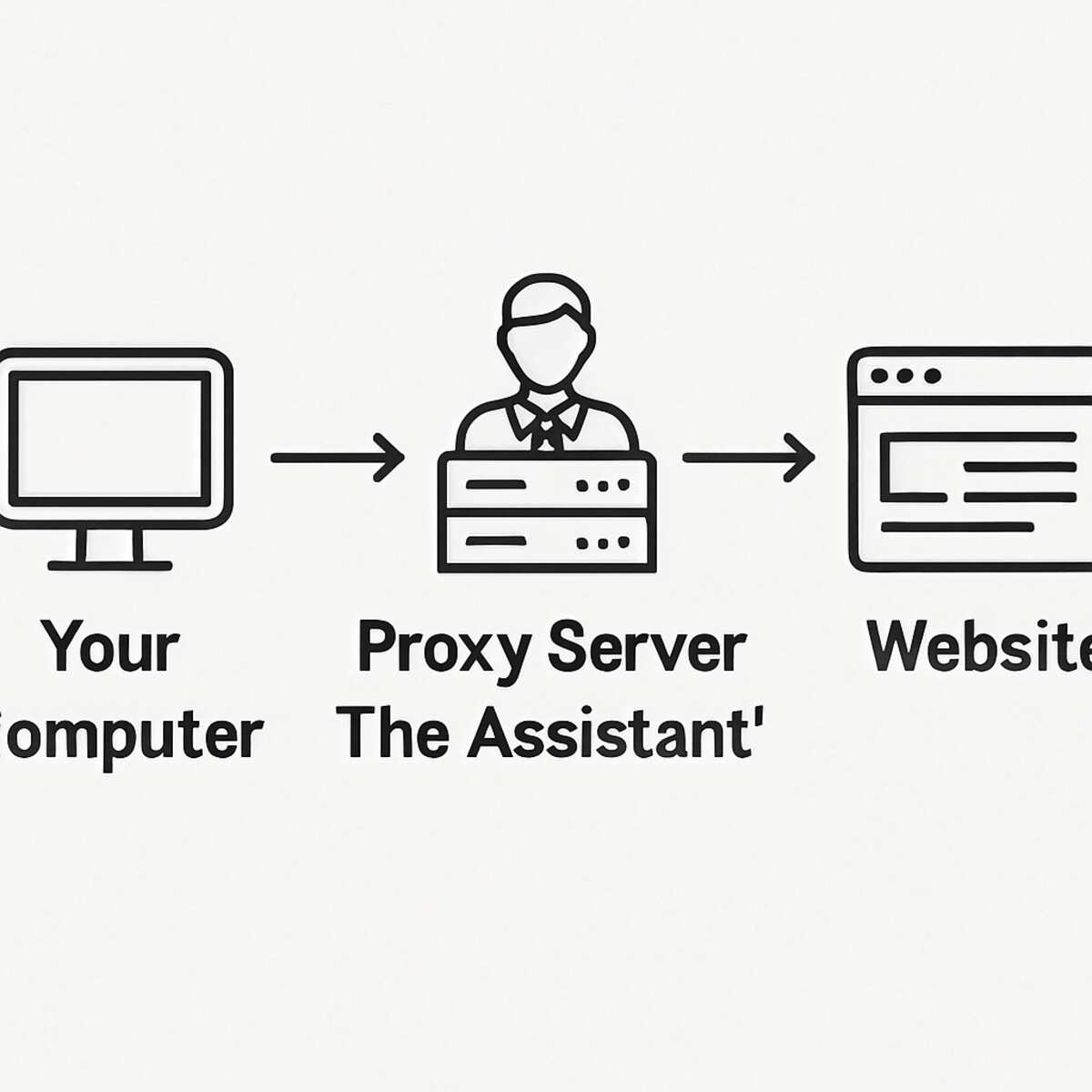
At its core, a proxy acts as a middleman for your internet traffic, and a datacenter proxy is a particularly fast and powerful type. To understand what is a server-based proxy, imagine hiring a personal assistant who works out of a high-tech corporate office. They handle all your requests with incredible speed, using their professional address instead of your home one. This guide explores what datacenter proxies are, why they are used by businesses, and which key features make them an essential part of the modern internet.
Your Digital Address: What an IP Address Is and Why It Matters
Imagine your home has a unique mailing address. Without it, no one could send you packages or letters. The internet works in a very similar way. Every device connected to it, from your laptop to your phone, has a unique digital address that tells websites where to send information. This is called an IP address.
When you visit a website, your browser’s request is like sending a letter that includes your return address. The website reads your IP address and knows exactly where to send back the page, images, and videos you asked for. This constant back-and-forth happens for every single thing you do online, making your IP address essential for the web to function.
Crucially, your IP address also reveals your general geographic location, like your city or country. This is why you see ads for local car dealerships or get the weather forecast for your area without ever typing in your location. Because it identifies your connection and location, it’s a key piece of information that stands in the way of truly anonymous browsing.
So, what if you didn’t want every website to know your real location? Or what if a business needed to see how its website appears to customers in another country? This is where IP address masking techniques come into play. By using a “middleman” for your internet traffic, it’s possible to borrow a different IP address, effectively changing your digital location entirely.
The Proxy: Your Internet Go-Between
To understand these IP address masking techniques, imagine you want to ask a question at a big public event but don’t want everyone to know it was you. Instead of raising your own hand, you pass a note to a trusted friend who then asks the question for you. To everyone else, the question came from your friend, not you.
This digital go-between is called a proxy server. It’s a computer that sits between you and the rest of the internet, acting like that helpful friend. When you use a proxy, you don’t send your requests directly to a website. Instead, you send them to the proxy server first. The proxy then forwards your request to the website using its own IP address, effectively hiding yours from view.
The process is straightforward. First, your computer connects to the proxy. Then, the proxy takes your request—like “show me the front page of this news site”—and sends it off. When the news site sends the page back, it goes to the proxy’s IP address. Finally, the proxy forwards that information back to you. The website never sees your real digital address; it only ever interacts with the proxy.
Not all proxies are created equal. The type of proxy you use matters, as some are simple, while others are incredibly powerful and operate from massive, high-tech facilities. This is where we get into a specific and common type: the datacenter proxy.
Why a “Datacenter” Proxy is Like a Corporate Office, Not a House
Remember that “friend” who asks questions for you? Now, imagine that friend isn’t just another person in the crowd but a professional spokesperson working from a massive, high-tech corporate office building. This office has its own commercial address and an incredibly fast, dedicated internet connection, far more powerful than what you have at home. This is the core idea behind a datacenter proxy.
That high-tech office has a technical name: a data center. These are secure, temperature-controlled buildings packed with thousands of powerful computers called servers. A datacenter proxy is simply a proxy server running on one of these machines. Instead of using an IP address associated with a home internet provider like Comcast or AT&T, it uses a commercial IP address owned by the data center itself.
The biggest advantage of this setup is pure, unadulterated speed. Your home internet connection is shared with your neighborhood, and its speed can fluctuate. A datacenter, however, has an enormous, business-grade pipeline to the internet designed for heavy traffic. When your request goes through a datacenter proxy, it travels along this digital superhighway, allowing it to gather information much faster than a standard connection ever could.
However, there’s a trade-off for all that power. Because these commercial IP addresses come from known data centers, websites can often tell that the traffic isn’t from a regular home user. It’s like receiving a letter postmarked from “123 Business Plaza” instead of “456 Maple Lane.” It’s not necessarily suspicious, but it clearly identifies the sender as a commercial entity, not an individual browsing from their couch.
When you think of a datacenter proxy, don’t picture a clever disguise. Instead, think of it as a powerful, efficient business tool. It prioritizes speed and the ability to handle huge volumes of requests over blending in with everyday internet users. This unique combination of speed and transparency makes it perfect for specific business tasks that require raw performance.
The Need for Speed: How Businesses Use Datacenter IPs for Massive Data Collection
Why would a business want a tool that’s incredibly fast but doesn’t try too hard to hide its commercial nature? The answer lies in tasks that require immense speed and volume, where blending in is less important than getting the job done quickly. The number one job for datacenter proxies is automated data gathering, a process often called web scraping.
Think of web scraping as hiring a team of lightning-fast researchers to read websites for you. Instead of a person manually clicking through pages, a computer program does it automatically, pulling specific information—like prices, product names, or stock levels—and organizing it into a neat list. Businesses rely on this data to make smart decisions, but the sheer amount of information they need is staggering.
To understand the scale, consider a large online retailer wanting to monitor its competitors’ prices. A human’s task looks simple, but a business needs to check:
- Price on Product A
- Price on Product B
- …all the way to Product 10,000
- …across 5 different competitor websites
- …every single hour.
Doing this manually is impossible. This is precisely how to use datacenter IPs for web scraping: you assign these automated tasks to them. Because a single datacenter proxy can send out requests so rapidly, it’s often considered the fastest proxy for data collection when raw speed is the main goal. A business can run thousands of these scraping tasks simultaneously without a hitch.
For this reason, companies often buy datacenter proxies in bulk—sometimes hundreds or thousands at a time. They are the cost-effective workhorses of the data world, providing the raw power needed to fuel market research, lead generation, and competitive analysis. They are less of a disguise and more of a turbocharger for a company’s data-gathering engine.
The Trade-Off: Are Datacenter Proxies Easy to Detect?
All of that high-speed activity from a datacenter doesn’t just fly under the radar. Websites have become very good at spotting traffic that doesn’t look like it’s coming from a regular person browsing at home. This brings us to the main drawback of datacenter proxies: because their IP addresses come from commercial buildings, they are often easy to identify.
Think of it this way: a website’s security system is like a bouncer at a club. When your request arrives, the bouncer looks at its ID—the IP address. If the address belongs to a known corporate datacenter, it’s like showing up in a big commercial van instead of a personal car. It immediately signals that the visitor is likely a business or an automated program, not an average user. This is why the answer to “are datacenter proxies detectable?” is a straightforward yes.
For some websites, this is a major red flag. Highly secure platforms, like social media sites trying to prevent fake accounts or e-commerce stores dropping limited-edition products, are on high alert for bot activity. When they detect a flood of requests from a known datacenter, they might block that IP address to ensure fair access for real customers. This is one way websites try preventing IP bans with proxies—by filtering out the most obvious ones.
Using a datacenter proxy is a trade-off between speed and stealth. You get incredible speed and affordability, but you lose the disguise of a regular home internet user. For many data-gathering tasks on websites that don’t have strict security, this is perfectly fine. But when blending in is the most important part of the mission, you need a proxy that looks like it’s coming from a real suburban home, not a corporate office.
Datacenter vs. Residential Proxies: A Corporate Office vs. a Real Suburban Home
We’ve seen that datacenter proxies, while incredibly fast, can stick out like a sore thumb to website security. If your goal requires you to blend in seamlessly with regular online traffic, you need a different tool. This is where datacenter proxy alternatives come into play, with the most effective being the residential proxy.
A residential proxy solves the detection problem by using a completely different kind of IP address. Instead of an address from a commercial datacenter, it borrows one from a real, everyday internet connection—like the one you might have at home from providers like Comcast or AT&T. This means that when your request goes through a residential proxy, the website sees it as coming from a regular person’s laptop or phone in a suburban house. It’s the ultimate digital camouflage.
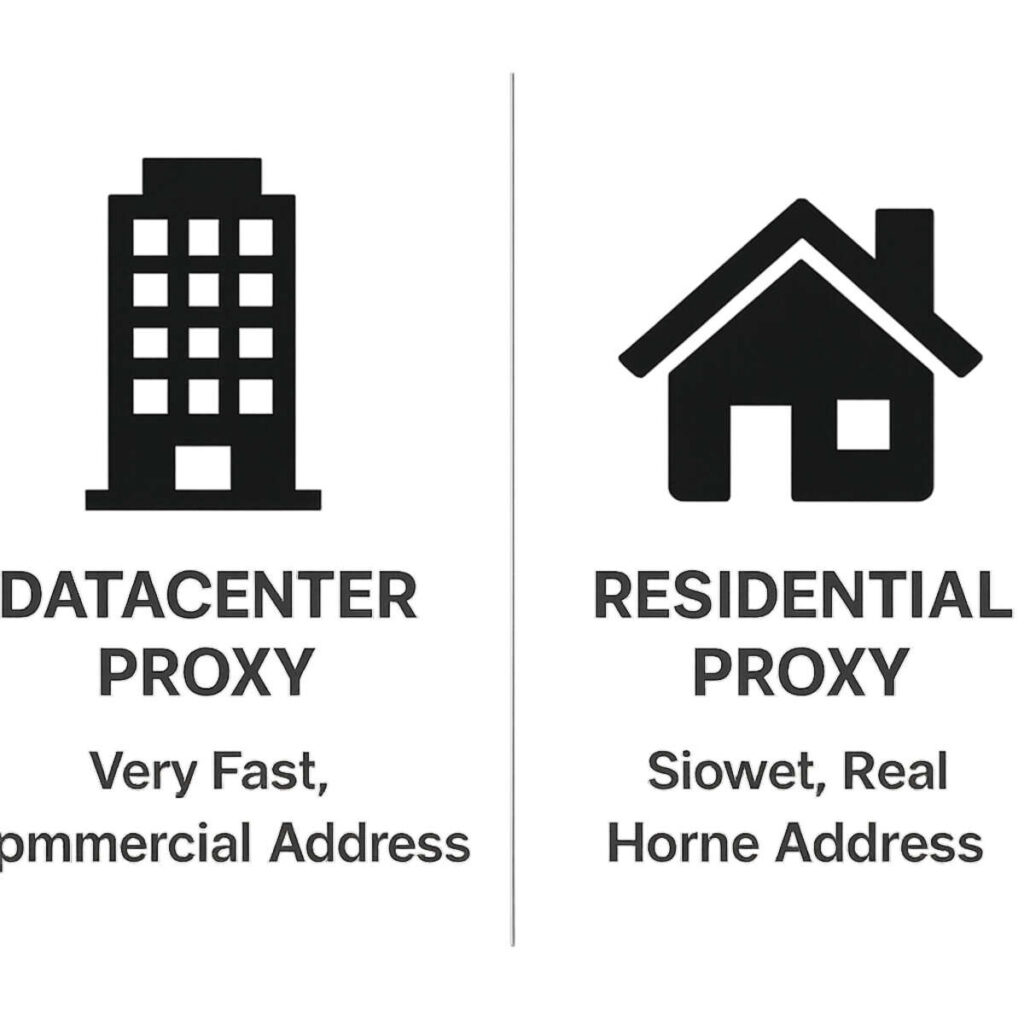
This brings us to the central trade-off. The datacenter vs residential proxy speed debate is straightforward: datacenter proxies are almost always faster and cheaper because they are purpose-built for high-volume tasks. Residential proxies, on the other hand, are prized for their authenticity. Because they rely on real home networks, they are generally a bit slower and more expensive, but they are far less likely to be blocked by sensitive websites.
So, how do you choose? The best datacenter proxies are perfect for jobs where speed is king and detection is a low risk, like gathering public data from simple websites. A residential proxy is the go-to choice for interacting with highly-secured platforms. Think of tasks like managing a brand’s social media account, verifying ads appear correctly in different regions, or purchasing limited-edition sneakers—all activities where looking like a real user is critical.
Whether you choose a datacenter or residential proxy, is that IP address all yours, or are you sharing it with others? This leads to the next important distinction: using a shared IP versus a dedicated one.
Shared vs. Dedicated IPs: Riding a Public Bus or Hiring a Private Taxi?
Once you’ve decided between a commercial datacenter proxy and a residential one, you face your next major choice. Think of it like deciding how to get around a city. You know your destination, but will you take a public bus or hire a private taxi? This choice between sharing and having exclusive use is central to how proxies work, and it’s all about the IP address.
A shared IP is the public bus of the proxy world. It’s the most common and affordable option when people first buy datacenter proxies. You and several other users are all assigned the same proxy IP address, sharing it to browse the web. While this is great for your budget, it comes with a “bad neighbor” risk. If another person using that same IP gets it blocked from a website for suspicious activity, you get blocked too—even if you did nothing wrong. You’re all on the same bus, and if the bus gets a ticket, everyone is delayed.
In contrast, a dedicated IP is your private taxi. When you buy datacenter proxy servers with a dedicated IP, that address is assigned exclusively to you. No one else can use it. This gives you complete control over the IP’s reputation. If it gets blocked, it’s because of your own actions, not someone else’s. For businesses or individuals who need consistent, reliable access without interference, this control is worth the higher cost. The ride is yours and yours alone.
The choice in the shared vs dedicated datacenter IPs debate comes down to a trade-off between cost and reliability. A shared IP is a great, low-cost starting point for general tasks. A dedicated IP provides the clean, predictable history needed for more sensitive projects. Whether you’re on a shared bus or in a private taxi, there’s one more detail: does your IP address stay the same for your entire journey, or does it change at every stop?
Rotating vs. Static IPs: Changing Your Disguise or Keeping the Same One?
Imagine you’re a secret agent on a mission. Do you wear the same convincing disguise the entire time, or do you change your appearance at every street corner to avoid being noticed? This is the essential difference between a static and a rotating proxy. Once you’ve chosen your datacenter proxy, you have to decide how it will behave: will it give you one consistent identity or a constantly changing one?
A static proxy is like wearing the same disguise for the whole mission. It gives you one single IP address that doesn’t change. Every website you visit sees the same IP, time after time. A common question is, what are static proxies used for? The answer is any task that requires a consistent identity. If you’re managing a company’s social media account, for example, logging in from a different IP address every five minutes would look suspicious. The appeal of setting up a static server proxy is that you get a dependable, unchanging address that builds trust with the sites you visit.
On the other hand, rotating proxies are all about changing your disguise constantly. Instead of one fixed IP, you get a new one from a large list—sometimes for every single click you make. This is the core idea behind rotating datacenter IP addresses. Think of a business trying to check the prices of 1,000 different products on a competitor’s website. If all 1,000 requests came from the same IP address in just a few minutes, the website would instantly know it’s a bot and block it. By rotating the IP for each request, it looks like 1,000 different people are casually browsing the site, which draws no suspicion.
So, the choice isn’t about which one is “better,” but which one is right for the job. A static proxy provides the stability needed for managing accounts or maintaining a single, long-lasting session. A rotating proxy provides the anonymity and scale needed to gather massive amounts of public information without getting flagged. One is for being a consistent, recognizable visitor; the other is for blending into a large crowd.
Why ‘Too-Good-to-be-True’ Cheap Proxies Are a Risk
That rock-bottom price on a proxy service can feel tempting, but it often comes with hidden costs. Think of it like buying a used car. A deal that seems incredible on the surface might be hiding a faulty engine or a history of accidents. The same logic applies when you look to buy datacenter proxy servers. The price is often a direct reflection of the quality, reliability, and safety you’re getting.
The most immediate problem you’ll face with a cheap service is poor performance. These providers often cram too many users onto the same IP addresses, like funneling an entire city’s traffic onto a single-lane road. The result? Your connection slows to a crawl, and the IP address you’re using is more likely to be overworked and already blacklisted by many websites. This defeats the entire purpose of preventing IP bans with proxies; a bad proxy can actually make you more likely to get blocked.
Beyond just being slow, there’s a more serious question to ask: where did these cheap IPs come from? Reputable providers lease their IP addresses from legitimate sources and carefully manage them. Unscrupulous services, however, might use IPs obtained through unethical or even illegal means, such as from hacked computers. The risks of using cheap server IPs aren’t just about bad performance; using them could unintentionally associate your activity with a shady digital neighborhood, putting your own data and security at risk.
A reliable proxy service is built on trust and maintenance. A provider invests in keeping its IP addresses clean, fast, and exclusive to ensure they work as promised. When a price seems too low, it’s usually because those critical investments in quality and security were skipped. You get what you pay for, and investing a little more in a reputable service is the best way to ensure your digital disguise is effective and safe.
A 3-Step Look at Datacenter Proxy Configuration
When you hear the word “configuration,” you might picture a programmer typing complex code into a black screen. Fortunately, setting up a static server proxy is far simpler. In most cases, it’s less about coding and more like logging into a new account for the first time.
The secret lies in a special set of login details you get from your provider, often called “proxy credentials.” Think of these like a key and a very specific address for a private entrance. You get a list that tells your software exactly where to go and how to get in. This is essentially how to use datacenter IPs—not with technical wizardry, but with a simple list of directions.
The process consists of three easy steps:
- Get Your Credentials: Your provider will give you a list containing an IP Address (the server’s street address), a Port number (the specific door to use), and a Username/Password (the key to unlock it).
- Enter Them Into Your Software: Most tools, from browser extensions to dedicated apps, have simple fields labeled “IP,” “Port,” “Username,” and “Password.” You just copy and paste the information in.
- Activate the Connection: Once entered, there’s usually a simple “Connect” button or an on/off switch. With one click, your internet traffic starts routing through the proxy.
That’s really all there is to it. You aren’t building an engine; you’re just putting the key in the ignition and turning it. This accessibility is a major reason why datacenter proxies have become such a powerful and widely used tool for businesses and individuals alike.
Choosing the Right Proxy for the Job
The next time you see flight prices shift unexpectedly or notice an ad that feels too local, you’ll have a better understanding of the mechanics at play. Businesses constantly gather information online, and a datacenter proxy is a fundamental tool that powers this activity by providing an alternate IP address.
Choosing the right proxy involves a series of decisions based on your specific needs, balancing speed, stealth, and cost. The core trade-offs are:
- Datacenter vs. Residential: Datacenter proxies offer immense speed from a commercial source, while residential proxies provide authenticity by using IP addresses from real home internet connections.
- Shared vs. Dedicated: Shared IPs are cost-effective but risk being blocked due to others’ actions. Dedicated IPs offer exclusive use and a clean reputation at a higher price.
- Static vs. Rotating: Static IPs provide a single, consistent address for tasks that require a stable identity. Rotating IPs offer a pool of constantly changing addresses for large-scale data gathering and anonymity.
By understanding this hierarchy of choices, you can select the right tool for any task, whether it’s performing market research, verifying ads, or managing online accounts from different geographic locations. The internet remains a complex marketplace, but its tools are no longer a mystery.
