


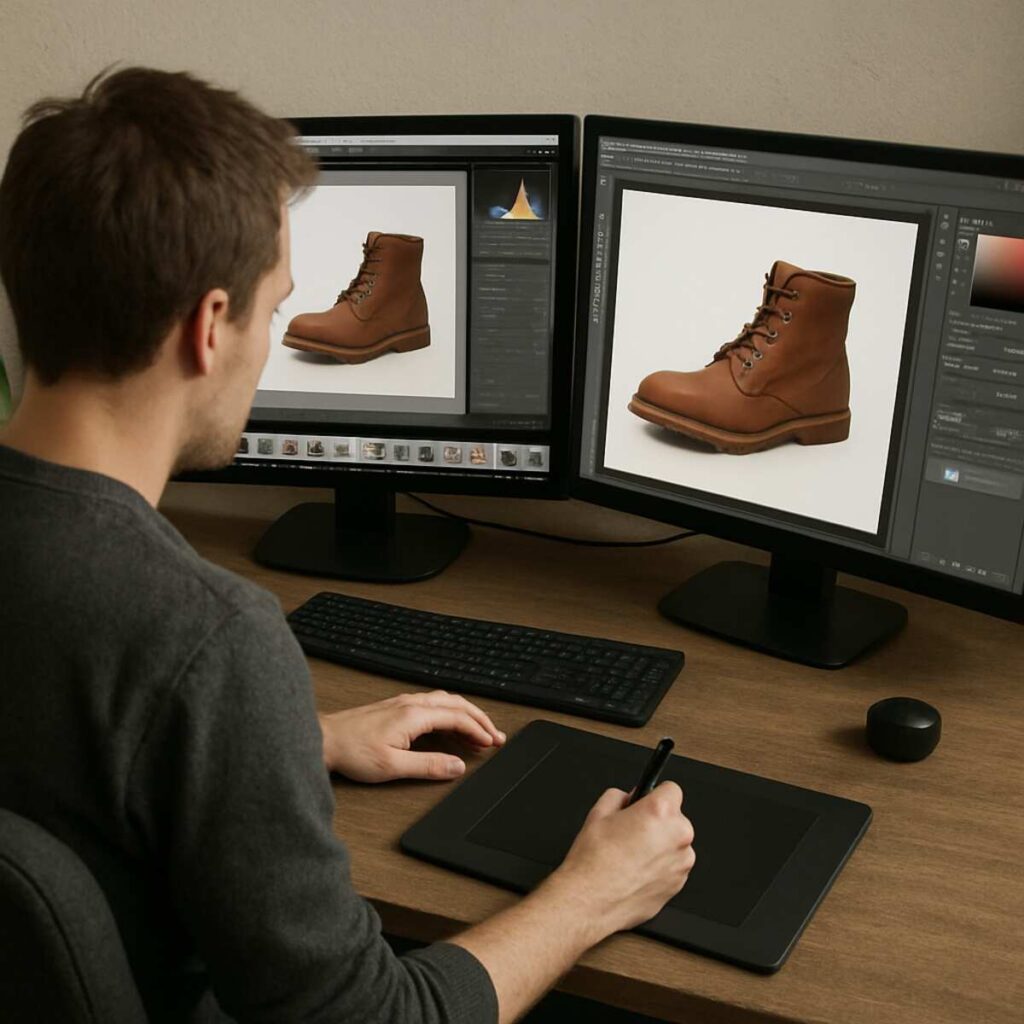
In today’s hyper-visual digital landscape, an image is no longer just a mere representation of a product; it is the digital storefront, the silent salesperson, and the very foundation of consumer trust. Whether you are an e-commerce giant, an independent photographer, or a growing startup, the quality of your visual content directly dictates your market positioning. To learn more, check out clippingpathwise.com
However, capturing a great photograph is only the first step in a much longer journey. The magic that transforms a raw, unpolished photograph into a high-converting, flawless asset happens in post-production. Taking a Clipping Path Wise approach—meaning making smart, strategic decisions regarding how your images are isolated and edited—can drastically alter the trajectory of your brand’s visual identity.
In this comprehensive guide, we will explore the depths of image manipulation, dissect the tools and techniques used by industry experts, and reveal how leveraging professional editing solutions can scale your business, streamline your workflow, and ultimately drive revenue.
The Foundation of Image Perfection: Understanding the Clipping Path
At the heart of professional image editing lies a fundamental technique that has revolutionized the world of graphic design and photography: the clipping path. But what exactly is it, and why does it remain the gold standard for image isolation?
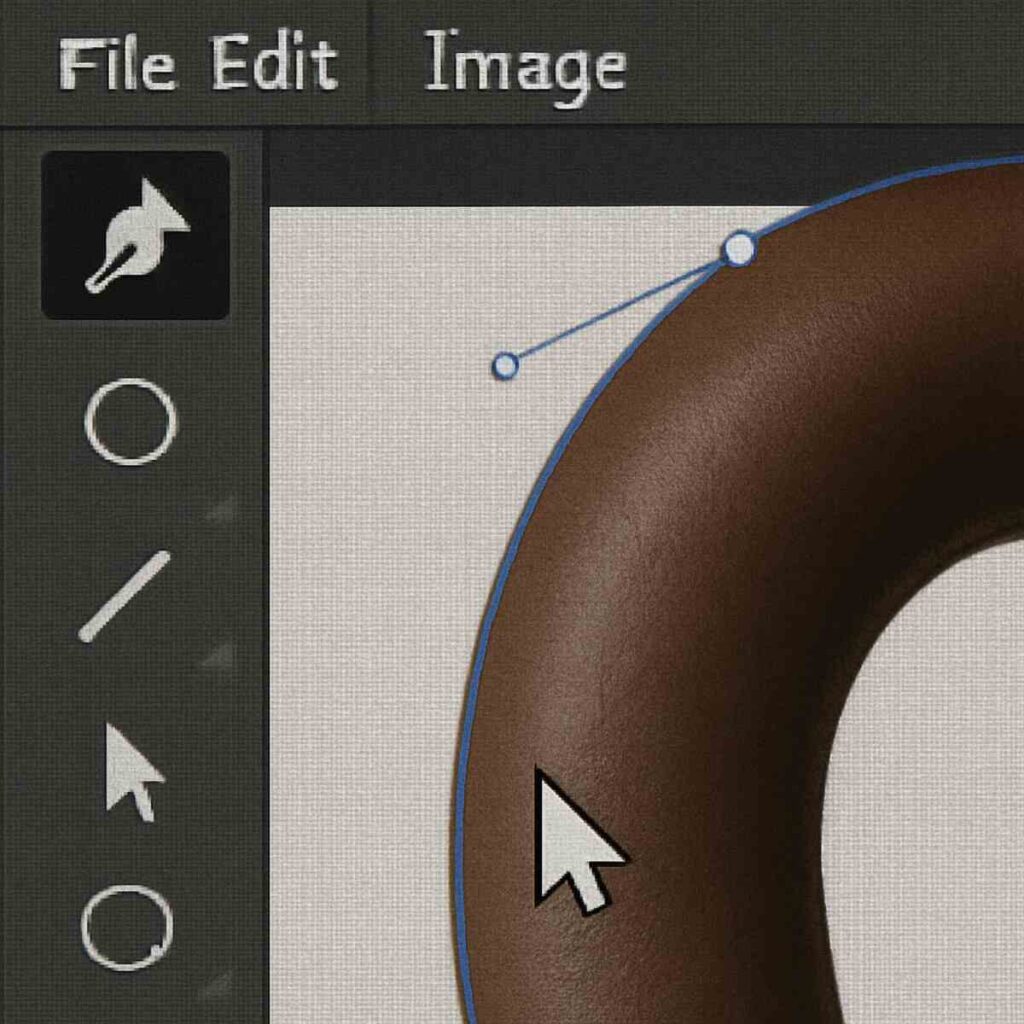
A clipping path is essentially a closed vector path or shape used to cut out a 2D image in image-editing software. Everything inside the path is included after the clipping path is applied, while everything outside the path is omitted.
The Mechanics of Precision
When professionals execute this technique, they rely heavily on the adobe photoshop pen tool for vector paths. Unlike basic selection tools like the Magic Wand or the Quick Selection tool, the Pen Tool allows the editor to create anchor points and manipulate bezier curves with mathematical precision. This results in incredibly sharp, crisp edges that perfectly define a product, regardless of how much you zoom in.
Manual Precision vs. Artificial Intelligence
In an era dominated by rapid technological advancements, many businesses wonder about the difference between hand-drawn paths and automated tools.
- Automated Tools (AI/One-Click Removers): These tools analyze pixel contrast to guess where an object ends and the background begins. While they are fast and continuously improving, they struggle immensely with complex edges, low-contrast areas, and intricate shapes. The result is often a jagged, “haloed,” or unnatural edge that instantly betrays the image as poorly edited.
- Hand-Drawn Paths: Executed by human experts, hand-drawn paths follow the exact organic contours of the product. The editor makes intelligent decisions about where to place anchor points, ensuring the object’s structural integrity is maintained. For commercial purposes, manual paths remain vastly superior.
Taking a Clipping Path Wise approach means recognizing that while automation has its place in rapid prototyping, final commercial assets require the irreplaceable touch of human precision.
The Core Service: Background Removal and Its Impact
The most immediate application of clipping paths is background removal. While it sounds simple, isolating an object from its background is a complex necessity for modern businesses.
Why Background Removal is Non-Negotiable
When a product is photographed, the background often contains shadows, varying light gradients, or studio equipment. To present a unified, professional catalog, these distractions must be eliminated. Clean, pure white, or transparent backgrounds ensure that the viewer’s undivided attention remains solely on the product.
Furthermore, professional background removal for photographers allows creatives to focus on what they do best: setting up the perfect lighting, directing models, and capturing the essence of the subject. By offloading the tedious extraction process, photographers can take on more clients and deliver projects much faster.
The Technical Divide: Clipping Path vs Image Masking
A common point of confusion for those new to outsourcing post-production is knowing when to use which technique. Understanding the clipping path vs image masking debate is crucial for achieving the best results.
- Clipping Path: Best used for objects with hard, smooth, and defined edges. Think of electronics, furniture, books, packaged goods, and simple apparel. The vector path slices clean lines around the object.
- Image Masking: Essential for subjects with soft, complex, or translucent edges. If you are photographing a model with flowing hair, a fluffy pet, a translucent glass bottle, or fine mesh fabrics, a vector path will make the edges look artificially cut out (like a paper doll). Image masking uses advanced channel selections, background eraser tools, and color separation techniques to retain fine details down to a single strand of hair.
A reliable clipping path services provider will automatically know which technique to apply, often combining both in a single complex image to achieve a flawless extraction.
Specialized E-Commerce Product Photo Editing Services
The e-commerce industry relies entirely on visual representation. Because customers cannot touch, feel, or try on products online, the image must convey texture, quality, and scale. This demand has given rise to specialized ecommerce product photo editing services tailored to different retail niches.
The Apparel Industry: Creating the Illusion
For clothing brands, displaying garments flat on a table (flat lay) can look unappealing, while hiring models for every single SKU can be prohibitively expensive. The solution is the ghost mannequin effect for clothing brands.
Also known as the invisible mannequin technique, this process involves photographing the garment on a physical mannequin, and then taking secondary shots of the inner neck, back, or hemline. In post-production, editors use clipping paths to remove the mannequin entirely and composite the inner pieces together. The result? A hollow, 3D, lifelike representation of the garment that helps the customer visualize how it would drape on a human body, significantly boosting buyer confidence.
The Jewelry Industry: Masterful Retouching
Jewelry photography is notoriously difficult. Gems are highly reflective, capturing reflections from the camera, the studio room, and the photographer. Metals can look dull, and microscopic dust particles look like boulders under macro lenses.
This is where high-end jewelry retouching techniques come into play. A professional editor will:
- Use complex multi-clipping paths to separate stones from the metal settings.
- Recreate lost shadows and add realistic reflections to make diamonds sparkle.
- Smooth out the metal bands, removing scratches and unwanted reflections using the healing brush and frequency separation.
- Enhance the color and clarity of gemstones to ensure they look vibrant and luxurious.
Conquering the Marketplaces
Selling on your own website gives you creative freedom, but selling on massive marketplaces requires strict adherence to their visual guidelines. Therefore, optimizing product images for amazon and ebay is a specialized service in itself.
- Amazon Requirements: The main product image must have a pure white background (RGB 255, 255, 255). The product must fill at least 85% of the image frame. Blurry images, watermarks, text, and inset images are strictly prohibited for main images.
- eBay Requirements: Similar to Amazon, eBay strongly encourages white or light backgrounds and requires a minimum width or height of 500 pixels, though 1600 pixels is recommended for optimal zoom functionality.
By utilizing targeted clipping path services, sellers can ensure 100% compliance with marketplace algorithms, avoiding listing suppression and boosting their search rankings.
Color and Consistency: Elevating the Visual Experience
Background removal and structural editing are only part of the equation. To build a truly professional brand aesthetic, color management is paramount.
Often, lighting conditions in a studio can slightly alter the true color of a product. If a customer orders a “cherry red” dress and receives a “burgundy” one, the likelihood of a return (and a negative review) skyrockets.
Leveraging cost-effective color correction services allows businesses to maintain absolute color fidelity. Editors adjust white balance, exposure, contrast, and saturation so that the digital image perfectly matches the physical product.
Furthermore, colour correction services are invaluable for catalogue consistency. If a company sells a t-shirt in 15 different colors, it is inefficient to photograph every single variant. Instead, the photographer shoots one perfect image (usually of a neutral gray or white shirt), and the editing team uses advanced clipping paths to isolate the garment and digitally recolor it to match the exact Pantone swatches of the remaining 14 variants. This saves a massive amount of time and money.
The Direct Business Impact of Flawless Imagery
While graphic design and image manipulation are technical skills, their ultimate purpose is commercial success. The link between high-quality imagery and consumer psychology is undeniable.
Driving Sales and Reducing Returns
There is a direct correlation between image quality and revenue. Improving website conversion rates with professional photos is one of the most cost-effective marketing strategies a business can deploy.
When a customer lands on a product page, they immediately assess the brand’s trustworthiness based on visual cues. Blurry images, inconsistent backgrounds, and poor lighting subconsciously signal a lack of professionalism, leading to high bounce rates. Conversely, crisp, well-lit, consistently edited images convey authority, luxury, and reliability.
Furthermore, detailed imagery reduces return rates. By providing multiple angles, zoom capabilities, and highly accurate color representations, customers know exactly what they are purchasing, aligning their expectations perfectly with reality.
Workflow and Preparation: Setting Up for Success
To get the absolute best results from an editing partner, businesses must optimize their initial processes. Knowing how to prepare images for ecommerce websites before sending them off for editing is crucial.
Actionable Tips for Image Preparation:
- Shoot in RAW: Whenever possible, photographers should shoot in RAW format rather than JPEG. RAW files retain all the data captured by the camera sensor, providing editors with maximum flexibility to recover blown-out highlights, lift shadows, and correct color without degrading image quality.
- Ensure Even Lighting: While editors can work miracles, severe, harsh shadows crossing a product make clipping paths much more difficult and can result in an unnatural final look. Flat, even lighting is best for e-commerce.
- Organize Files Systematically: Create a clear folder structure and naming convention. Group images by product category or SKU.
- Provide Clear Instructions: When handing files to an editor, explicitly specify the required output format (e.g., JPEG with a white background, PNG with a transparent background), aspect ratio, margins, and any specific retouching needs.
The Strategic Advantage of Outsourcing
As a business grows, handling image editing in-house quickly becomes a bottleneck. The time spent meticulously drawing paths around products is time taken away from core business activities like marketing, product development, and customer service.
Why Scaling Requires External Support
Understanding the benefits of outsourcing bulk image editing is a game-changer for growing enterprises.
- Cost Efficiency: Hiring full-time, in-house photo editors incurs significant overhead, including salaries, benefits, software licenses, and hardware. Outsourcing converts these fixed costs into variable costs. You only pay for the edits you need, when you need them.
- Scalability: E-commerce businesses often face seasonal spikes. An internal team might struggle to process 5,000 images before a Black Friday launch, but a dedicated offshore agency can instantly scale its workforce to meet demand.
- Focus on Core Competencies: By delegating post-production, photographers can spend more time behind the camera, and business owners can focus on growing their operations.
Navigating Turnaround Times
One of the most pressing questions for businesses launching new campaigns is: What is the average turnaround time for photo retouching?
The answer depends on the project’s complexity and the agency you partner with. For standard background removal and clipping paths, reliable agencies offer a 12 to 24-hour turnaround. More complex tasks, such as high-end jewellery retouching or extensive image masking, might take 48 hours. Many top-tier providers operate 24/7, meaning you can upload a batch of raw files at the end of your workday and wake up to beautifully edited, web-ready images the next morning.
Evaluating Potential Partners
Choosing the right agency is a critical business decision. Knowing how to choose a reliable image editing partner will save you from missed deadlines and subpar quality. Here is what to look for:
- Quality Guarantee and Free Trials: A reputable provider will always offer a free trial (usually 2-3 images). Use this to test their precision with the pen tool, their adherence to your instructions, and their communication skills.
- Data Security: Ensure the partner has strict data protection policies. Your unreleased product images are confidential intellectual property.
- Customer Support: Look for agencies that offer 24/7 support. If an urgent revision is needed before a campaign launch, you need immediate access to your project manager.
- Pricing Transparency: Avoid partners with hidden fees. Pricing should be tiered based on complexity (e.g., simple, medium, complex, super-complex).
For new businesses operating on tight budgets, finding the best clipping path service providers for startups is essential. Startups should look for partners that do not require massive minimum order quantities and offer flexible, pay-as-you-go pricing models.
The Clipping Path Wise Approach: Moving Forward
To be truly “Clipping Path Wise” is to view image editing not as an administrative chore, but as a strategic asset. The digital marketplace is fiercely competitive. The barrier to entry for setting up an online store is lower than ever, which means standing out requires an unwavering commitment to quality.
Actionable Checklist for E-Commerce Excellence:
- Audit Your Current Catalogue: Take a critical look at your website. Are the backgrounds consistently white? Do the products align on the same baseline? Are the colors accurate?
- Establish a Style Guide: Create a definitive visual document detailing your brand’s specific requirements (margins, shadow types, background hex codes) to ensure uniformity across all future photo shoots.
- Test and Iterate: A/B test your product images. See if adding a subtle drop shadow or utilizing a ghost mannequin effect increases user engagement and time spent on page.
- Build a Relationship with an Editing Partner: Don’t treat your editing agency as a mere transactional vendor. Communicate your brand vision, provide feedback, and let them become an integrated extension of your creative team.
Conclusion
The journey from a raw capture to a polished, sales-generating asset is paved with meticulous attention to detail. Services ranging from fundamental background removal to complex graphic design interventions are the unsung heroes of successful online retail.
By understanding the vital nuances—such as the difference between automated guessing and manual precision, or knowing when to apply clipping paths versus image masking—you empower your brand to present its very best face to the world. High-quality imagery builds trust, reduces returns, and ultimately improves website conversion rates.
As you plan your next campaign, remember that investing in professional clipping path services and comprehensive ecommerce product photo editing services is an investment in your brand’s perceived value. Partner with the right experts, streamline your workflow, and watch as your perfectly optimized images transform passive scrollers into loyal customers. Be strategic, be demanding of quality, and always remain Clipping Path Wise.