


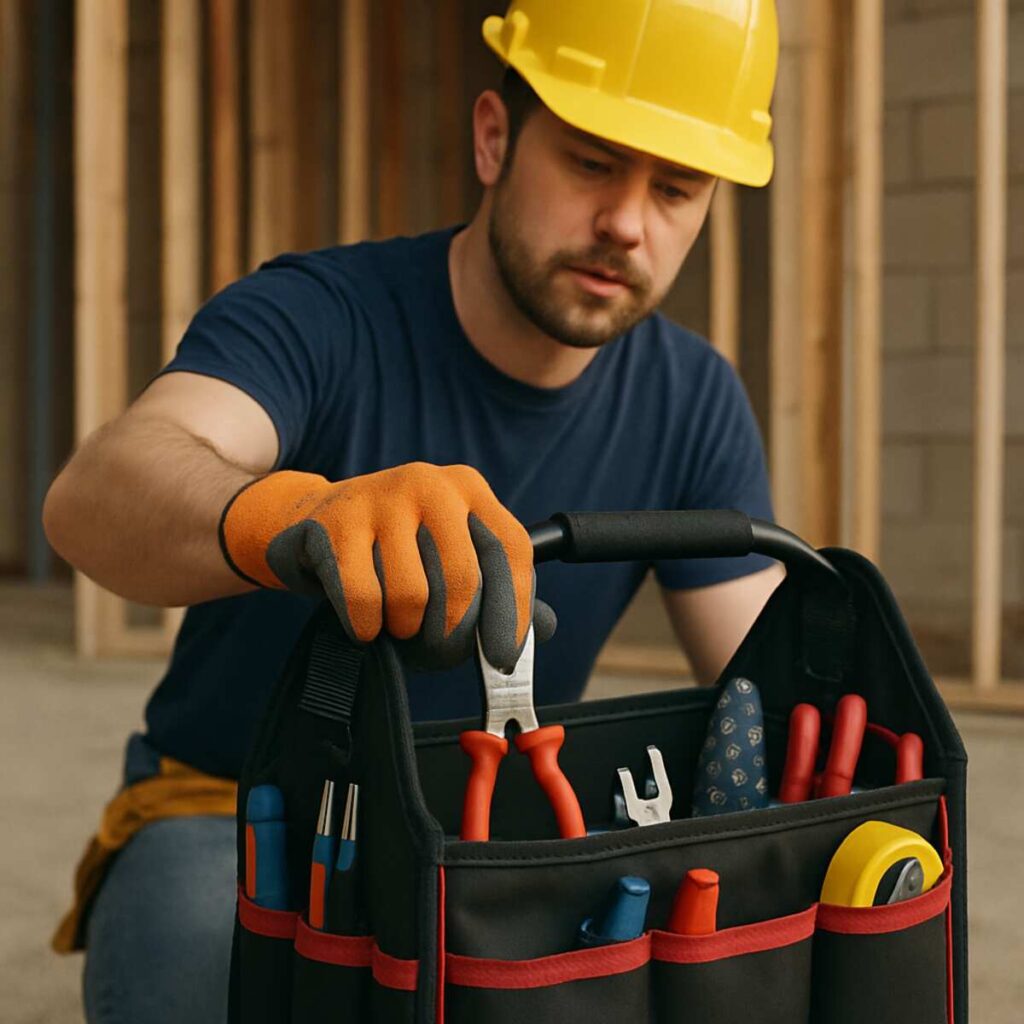
Every seasoned tradesperson knows the golden rule of the job site: time spent looking for a tool is money lost. Whether you are wiring a sprawling commercial complex or troubleshooting a faulty outlet in a historic home, your efficiency directly impacts your bottom line and professional reputation. At the core of this efficiency is your mobile workstation—the electrician tool bag. Find the best electrician Highlands Ranch CO.
More than just a vessel for carrying metal and rubber, a well-optimized tool bag is an extension of the electrician themselves. It dictates how quickly you can react to a problem, how protected your expensive testing equipment is, and how your body feels at the end of a grueling twelve-hour shift.
In this comprehensive guide, we will break down everything you need to know about building, organizing, and maintaining the ultimate electrical toolkit. From selecting the perfect carrier to mastering advanced organizational strategies, this guide will transform the way you approach your daily workflow.
The Foundation: Choosing the Perfect Carrier
Before we can discuss the tools themselves, we must address where they live. The market is flooded with carrying options, but electrical work demands specific features that generic hardware store bags simply cannot provide.
Backpack Tool Carrier vs Traditional Tote
The debate between the backpack tool carrier vs traditional tote is one of the most common discussions in breakrooms and on job sites. Both have distinct advantages, and the right choice depends entirely on your daily environment.
The Traditional Tote (Open-Top or Closed) Traditional totes, often featuring an open-top design with a rigid center handle, are built for ultimate accessibility.
- Pros: When you set a tote down, every tool is immediately visible and accessible. There are no zippers to fight with, making it ideal for service calls where you are stationary for long periods.
- Cons: Totes can be incredibly awkward to carry over long distances. They knock against your legs, throw off your center of gravity, and leave your tools exposed to the elements or falling debris.
The Tool Backpack Backpacks have surged in popularity over the last decade, and for good reason.
- Pros: A backpack keeps both of your hands free—a critical safety factor if you are carrying ladders, spools of wire, or navigating scaffolding. By keeping the load centered on your spine, it vastly improves mobility. Zipped up, it protects your gear from dust and rain.
- Cons: Accessing a tool requires you to take the bag off and unzip it, which can be slightly slower than reaching into an open tote.
For many modern electricians, the backpack is the primary transport method, while a smaller pouch or tote is kept in the van for quick, specialized tasks.
Ballistic Nylon vs Leather Tool Pouches
When evaluating the material of your tool bag or secondary tool belt, durability is paramount. You will frequently encounter the choice of ballistic nylon vs leather tool pouches.
Top-Grain Leather: Leather is the traditionalist’s choice. It is exceptionally durable, molds to the shape of your tools over time, and handles heat and sparks (like those from a nearby grinder or welder) better than synthetic materials. However, leather is heavy, requires regular conditioning to prevent cracking, and absorbs moisture.
Ballistic Nylon: Usually rated in “Denier” (look for 1680D nylon for professional use), ballistic nylon was originally developed for military body armor. It is incredibly resistant to tearing and abrasion. It is drastically lighter than leather, naturally water-resistant, and requires zero break-in time. For a primary electrician tool bag, high-denier ballistic nylon is widely considered the superior choice due to its strength-to-weight ratio.

Essential Features of a Top-Tier Tool Bag
Do not settle for a standard duffel bag. Electrical tools are sharp, heavy, and occasionally delicate. When shopping for your setup, ensure your bag includes the following premium features.
Molded Waterproof Base for Tool Protection
Job sites are rarely clean and dry. You will frequently find yourself setting your bag down on wet concrete, muddy residential plots, or snow-covered scaffolding. A molded waterproof base for tool protection is non-negotiable. Typically made of rugged polypropylene, this hard plastic bottom serves three purposes:
- Waterproofing: It stops ground moisture from seeping upward into the fabric, which could ruin power tools and rust hand tools.
- Stability: It keeps the bag standing perfectly upright. A bag that tips over spills its contents and slows you down.
- Puncture Resistance: It prevents sharp tools (like jab saws or long drill bits) from piercing the bottom of the bag and injuring your legs while walking.
Reinforced Handle Durability for Heavy Equipment
An electrician’s kit can easily weigh between 40 and 60 pounds once fully loaded with copper wire, heavy crimpers, and impact drivers. Standard stitched handles will fray and snap under this stress. Look for reinforced handle durability for heavy equipment. The best bags feature handles that are riveted directly into the hard plastic base or utilize steel cables wrapped in ergonomic rubber grips. If the handle stitching ever looks like it is pulling away from the fabric, the bag is unsafe to carry.
Ergonomic Tool Carrying Solutions for Back Pain
The trades take a massive toll on the human body, and back injuries are a leading cause of early retirement for electricians. Investing in ergonomic tool carrying solutions for back pain is an investment in your career longevity.
If you use a backpack, look for thick, breathable EVA foam padding on the back panel to promote airflow. Sternum straps and padded waist belts are crucial, as they transfer the load from your fragile shoulder joints to your much stronger hips and core.
Impact of Weight Distribution on Shoulder Fatigue
Even the best tool bag will cause injury if packed poorly. The impact of weight distribution on shoulder fatigue cannot be overstated. A lopsided bag forces your spine to curve to compensate, leading to muscle spasms and chronic shoulder impingement.
- Vertical Storage: Always store heavy hand tools vertically in designated pockets rather than letting them pool at the bottom.
- Center of Gravity: Keep your heaviest items (batteries, drills, heavy hammers) as close to the center of the bag—and as close to your body—as possible.
- Symmetry: Balance the left and right sides. If you have a heavy drill on the left, balance it with your socket set or bulk fasteners on the right.
Inside the Bag: The Essential Hand Tools
Now that we have selected a rugged, ergonomic carrier, it is time to fill it. While the specific tools you carry will evolve as you specialize, certain foundational items are required for everyone, from day-one apprentices to thirty-year masters.
Essential Tools for Residential Electrical Apprentices
If you are just starting your career, walking into a supply house can be overwhelming. You do not need to buy everything on day one, but you do need a solid foundation. Here are the essential tools for residential electrical apprentices that should form the core of your tool bag:
- Lineman’s Pliers (9-inch): Often jokingly called the “electrician’s hammer,” these are the most used tool in your bag. They are used for cutting, twisting, gripping, and pulling heavy-gauge wire. Look for high-leverage models with cross-hatched jaws.
- Wire Strippers: A dedicated pair of ergonomic wire strippers is vital for cleanly removing insulation without scoring the copper beneath. Get a pair that covers the most common residential gauges (10 AWG to 18 AWG).
- Screwdriver Set: You need a minimum of a #2 Phillips, a 1/4-inch slotted (flathead), a 3/16-inch cabinet tip, and a #1 and #2 square drive (Robertson). Insulated screwdrivers are a fantastic safety upgrade.
- Diagonal Cutting Pliers (Dikes): Essential for flush-cutting wires in tight junction boxes and snipping zip ties cleanly.
- Needle-Nose Pliers: Crucial for forming loops on the ends of wires to fit around terminal screws on receptacles and switches.
- Non-Contact Voltage Tester (NCVT): The “tick tester” is your first line of defense to ensure a circuit is dead before you touch it.
- Tape Measure: A 25-foot tape measure with a strong standout and a magnetic hook is ideal for measuring conduit runs and placing receptacle boxes at uniform heights.
- Torpedo Level: A compact, magnetic 9-inch level ensures your boxes, conduit bends, and light fixtures are perfectly straight.
- Utility Knife: Used for stripping the outer sheathing off Romex (NM-B) cable and opening material boxes.
- Claw Hammer: A basic 18oz hammer is necessary for driving staples to secure wire to wooden studs during residential rough-ins.
Heavy Duty Tool Storage for Commercial Electricians
As you move from residential into commercial and industrial sectors, the environments get harsher, the conduit gets thicker, and the tools get substantially heavier. Heavy duty tool storage for commercial electricians requires bags with wider compartments and ruggedized hardware to accommodate:
- Rotary Hammers and Impact Wrenches: Used for drilling into concrete and securing heavy Unistrut systems.
- Conduit Benders and Reamers: While benders usually sit outside the bag, a good conduit reaming attachment (to remove burrs from cut EMT) needs a dedicated, easily accessible spot.
- Large Allen Wrench Sets: Commercial panels and switchgear frequently use large hex lugs that require robust Allen keys.
- Nut Drivers and Socket Sets: Essential for assembling heavy-duty commercial lighting fixtures, cable trays, and motor control centers.
- Fish Tapes and Pulling Wire: Used for routing wire through hundreds of feet of conduit.
For commercial work, you may find that relying solely on a backpack isn’t enough. Many commercial electricians utilize a rolling tool box system for their heavy gear, using a smaller tool bag as a satellite kit to carry to specific floors or scaffolding levels.
Diagnostic and Testing Gear: The Brains of the Operation
Electrical work isn’t just physical labor; it is highly analytical. Troubleshooting a complex circuit requires precision instruments, and these delicate electronics demand respect and proper storage.
Multimeter and Tester Dedicated Storage Compartments
Throwing a $300 true-RMS multimeter into the bottom of a bag to bounce around with hammers and pry bars is a recipe for disaster. Scratched screens and bent test probes lead to inaccurate readings, which can be deadly.
When organizing your gear, utilize multimeter and tester dedicated storage compartments. Top-tier bags often feature a padded, rigid pocket near the top of the bag specifically designed for meters.
Essential Testing Gear to Protect:
- Digital Multimeter (DMM): The centerpiece of electrical diagnostics. Used to measure voltage, current, resistance, and continuity. Ensure your meter has a CAT III or CAT IV safety rating.
- Clamp Meter: Essential for measuring high current in commercial panels without having to break the circuit.
- Plug Tester (Receptacle Tester): A quick plug-in device that instantly tells you if a standard outlet is wired correctly, or if there is an open ground, reverse polarity, or open neutral.
- Circuit Tracer: A two-part tool (transmitter and receiver) used to find exactly which breaker in a crowded panel controls a specific outlet or light fixture.
Pro-Tip: Always remove the test leads from your multimeter before storing it in its dedicated compartment. Leaving the leads plugged in and bending them at a sharp 90-degree angle inside a cramped bag will cause the internal copper to break over time, leading to dangerous false-zero voltage readings.
Mastering Tool Organization
Having the right tools is only half the battle. Knowing exactly where they are without having to look is what separates a novice from a master electrician.
The Best Way to Organize Electrical Tools
The best way to organize electrical tools relies on a concept borrowed from manufacturing: Mise en place, or “everything in its place.” You should be able to reach into your bag blindfolded and grab your wire strippers.
- Zone Your Bag: Divide your bag into functional zones.
- Zone 1 (Quick Access): Lineman’s pliers, strippers, tape measure, non-contact voltage tester, and an 11-in-1 multi-screwdriver.
- Zone 2 (Hand Tools): Wrenches, nut drivers, Allen keys, and specialty pliers.
- Zone 3 (Power & Cutting): Drills, impact drivers, hacksaws, and hole saws.
- Zone 4 (Testing): Multimeters and delicate electronics in a padded top compartment.
- Store Vertically: Never lay hand tools horizontally. Insert them handles-up in vertical pockets. This allows you to identify the tool instantly by its handle color and pull it out without disturbing the tools around it.
- Frequency of Use: Tools you use every day should be on the exterior of the bag or at the very top. Tools you use once a month (like a specialized crimping tool or a tap-and-die set) should live at the bottom or in a separate secondary container.
Customizable Modular Tool Organization Systems
Workflows change depending on the day. On Monday, you might be roughing in a house (requiring hammers, staples, and drills). On Wednesday, you might be doing finish work (requiring precision screwdrivers, a level, and wire nuts).
To adapt, utilize customizable modular tool organization systems. These systems use internal Velcro panels, removable zippered pouches, and MOLLE (Modular Lightweight Load-carrying Equipment) webbing.
Instead of carrying a 50-pound bag everywhere, modular systems allow you to attach small zippered bags of wire nuts, Wago connectors, or specific drill bits only when you need them. You can pull out a “rough-in pouch” and swap it for a “trim-out pouch” seamlessly, keeping your overall load incredibly light and focused.
High-Visibility Interior for Finding Small Fasteners
The inside of an old-school canvas bag is often a dark, cavernous void. Dropping a tiny set screw or a specific wire connector into a black bag means you will likely never see it again until you dump the entire bag out on the floor.
Modern manufacturers have solved this by using a high-visibility interior for finding small fasteners. By lining the inside of the bag with bright neon orange, high-vis yellow, or bright blue fabric, the interior reflects light. This sharp color contrast makes black tools, silver screws, and colored wire nuts pop visually, eliminating the frustration of digging blindly in dark environments.
Integration: Making the Bag Work with Your Body
Your bag is your mobile hub, but you cannot carry it around a client’s living room while wiring a ceiling fan. This is where secondary carrying solutions come into play.
The Tool Belt Connection
While your bag acts as the mother ship, a well-fitted tool belt acts as your landing craft. You transport your main bag to the center of the room, load up your tool belt with the 5 to 7 specific tools needed for the immediate task, and get to work.
When setting up your belt:
- Dominant Side: Place your heaviest, most used tools (Lineman’s pliers, strippers, drill hook) on your dominant hand side.
- Non-Dominant Side: Place your fasteners (screws, wire nuts, staples) and tape measure on your non-dominant side. This allows your off-hand to feed materials to your dominant hand seamlessly.
- Suspenders: If you are wearing a belt for more than a few hours, invest in padded suspenders. Much like the ergonomic features of your main bag, suspenders transfer the weight of the belt off your lower back and distribute it across your shoulders and chest.
Job Site Protection and Weather Resistance
Electricians do not get to stop working just because the weather turns bad. Your tools are an expensive investment—often totaling thousands of dollars—and they need to be protected from the environment.
Weather Resistant Storage for Job Site Equipment
Whether it is a sudden downpour during commercial roof work or heavy dust from drywall sanders on a residential remodel, your bag must shield your gear. Look for weather resistant storage for job site equipment.
- Zippers: Ensure your bag features heavy-duty, interlocking YKK zippers that can be sealed tight. Some premium bags offer waterproof zippers that prevent rain from seeping through the teeth.
- Material Coatings: Many ballistic nylon bags are treated with a DWR (Durable Water Repellent) coating. Water should bead up and roll off the fabric, rather than soaking in.
- Rain Flies: Similar to hiking backpacks, some high-end electrician bags come with a hidden rain fly that can be quickly deployed to completely encase the bag in a waterproof shell during severe storms.
Preventing Tool Rust in Humid Work Environments
Moisture is the mortal enemy of hand tools. Even if your bag keeps the rain out, ambient humidity can cause high-carbon steel pliers and screwdrivers to develop surface rust in a matter of days. Rust binds up the hinges of your pliers and degrades the tips of your screwdrivers.
Preventing tool rust in humid work environments requires a proactive approach:
- Desiccant Packs: Throw several large silica gel packets (the kind you find in new shoe boxes) into the bottom of your tool bag and inside your zipped compartments. These absorb ambient moisture. Replace them every few months.
- Light Oiling: Once a month, wipe down the metal surfaces of your hand tools with a rag lightly soaked in 3-in-One oil, WD-40, or a dedicated tool wax. This creates a microscopic barrier that prevents oxygen and moisture from interacting with the steel.
- Dry Wet Tools Immediately: If you use a tool in the rain or drop it in a puddle, never put it back in your bag wet. Dry it thoroughly with a towel before it goes back into its pocket. A wet tool will create a humid microclimate inside your zipped bag, rusting everything else alongside it.
Maintenance and Longevity: Protecting Your Investment
You maintain your vehicle, and you maintain the electrical systems you install. You must also maintain your gear. A premium tool bag can last a decade if cared for properly, but it will fall apart in a year if neglected.
How to Clean and Maintain Trade Gear
Job sites are coated in concrete dust, drywall mud, grease, and unknown chemicals. This debris works its way into the fibers of your bag and the hinges of your tools, acting like sandpaper and degrading them over time. Knowing how to clean and maintain trade gear is essential for longevity.
Step-by-Step Bag Maintenance Routine (Perform Bi-Annually):
- The Complete Empty: Take every single tool, fastener, and scrap of wire out of the bag. Open every zipper and unclip every strap.
- The Shake and Vacuum: Turn the bag upside down over a trash can and shake vigorously. You will be amazed at the amount of sawdust, stripped wire insulation, and screws that fall out. Follow this up with a strong shop-vac using a brush attachment to clean out the deep crevices of the vertical pockets.
- Spot Cleaning: Do not put your tool bag in a washing machine; the rigid base and heavy fabrics will damage the machine and warp the bag. Instead, mix a solution of warm water and mild dish soap. Use a stiff nylon scrub brush to spot-clean oil stains, drywall mud, and dirt from the exterior ballistic nylon.
- Zipper Maintenance: Construction dust is notorious for destroying zippers. Use an old toothbrush to aggressively scrub the zipper teeth to remove grit. Once clean, run a stick of beeswax or a specialized zipper lubricant along the teeth. Open and close the zipper a few times. It will glide like it is brand new.
- Inspect for Damage: Check all the stress points. Look at the stitching where the shoulder straps meet the body of the bag. Check the rivets on the molded base. Catching a frayed strap early allows you to reinforce it with heavy-duty thread before it catastrophically fails on the job site.
- Air Dry: Leave all the compartments open and let the bag air dry completely in a well-ventilated area before putting your tools back in. Remember, trapped moisture causes rust!
Conclusion
Your electrician tool bag is much more than a mere carrying case; it is the control center for your professional life.
By carefully choosing between a backpack tool carrier vs traditional tote, prioritizing ergonomic tool carrying solutions for back pain, and implementing customizable modular tool organization systems, you transform a heavy burden into a streamlined system of efficiency. Protecting that investment with a molded waterproof base and dedicating time to preventing tool rust in humid work environments ensures that your tools will be ready to perform whenever you are.
Whether you are a first-year apprentice building your foundational kit or a master commercial electrician upgrading to heavy-duty storage, the way you organize, protect, and maintain your tools speaks volumes about your dedication to the craft. Equip yourself wisely, organize logically, work safely, and your tool bag will support you through a long, successful career in the electrical trades.